
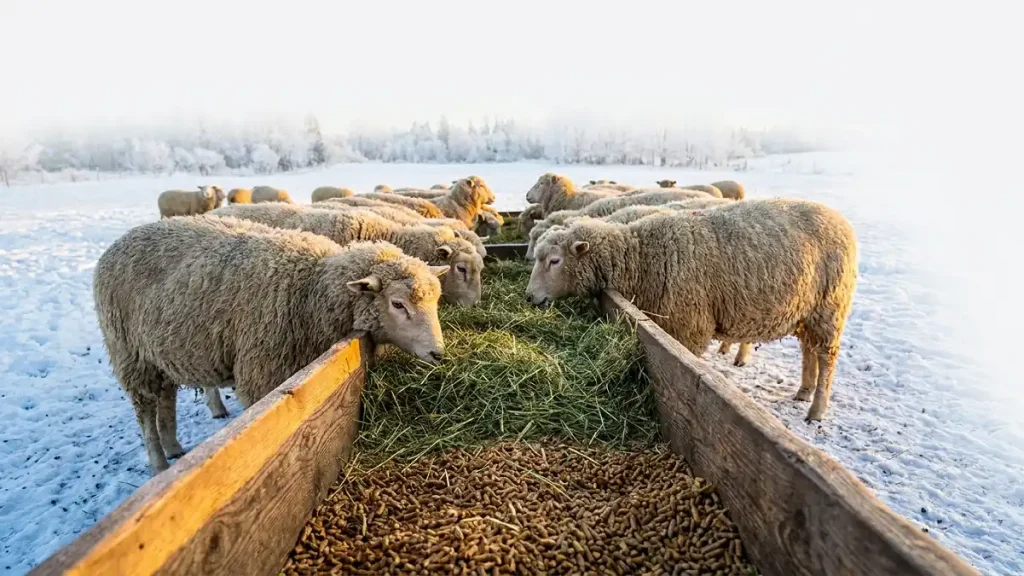
| Subject | Quick Summary |
|---|---|
| Primary Winter Feed | High-quality forage such as alfalfa, straw, and silage, combined with balanced concentrates, forms the foundation of the winter ration. |
| Energy Needs | Maintenance energy requirements increase in cold weather; controlled use of barley, corn, and pellets helps maintain body weight and production. |
| Protein & Minerals | Soybean meal, sunflower meal, mineral supplements, salt, and vitamins are essential to prevent nutritional deficiencies. |
| Water | Constant access to clean, non-frozen water is one of the most critical principles of winter nutritional management. |
| Proper Management | Dietary changes must be gradual, and body condition, age, pregnancy, lactation, and environmental conditions must be considered in feed formulation. |
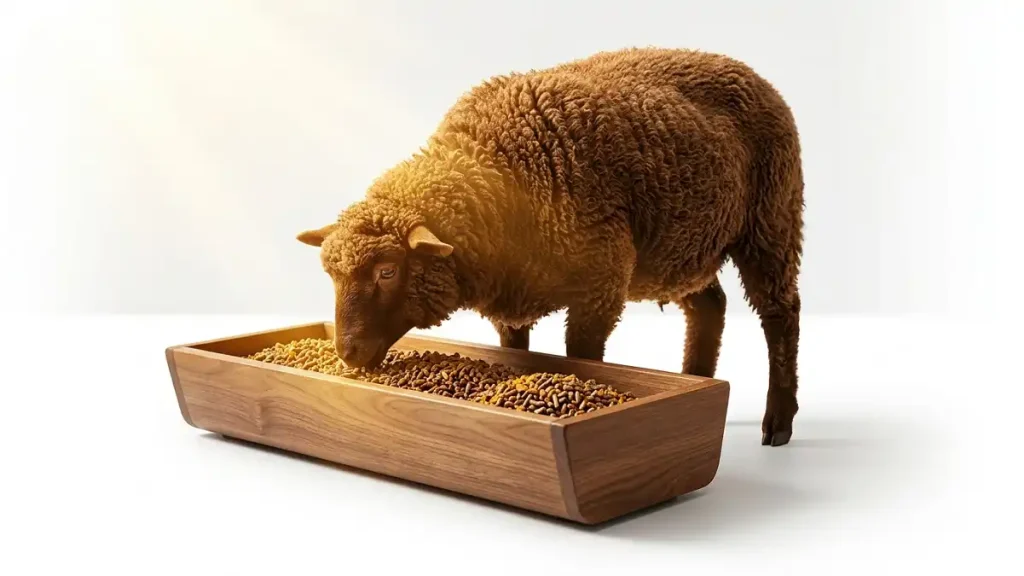
Sheep feed in winter must generally be based on high-quality dry forage, energy sources like barley and corn, protein supplements, and clean, non-frozen water. During this season, due to limited access to fresh pasture, any error in ration formulation can lead to weight loss, stunted growth, weakened immune systems, metabolic disorders, and reduced economic efficiency of the flock.
For the livestock farmer, winter is not just a season of cold; it is a critical period for nutritional management, flock health, and the prevention of environmental stress. In this season, sheep require a more precise and balanced ration to maintain body temperature, combat cold stress, and support physiological functions. If this ration is formulated based on age, physiological stage, body condition score (BCS), breed, and the severity of the cold, one can prevent performance decline and even improve fattening yields and animal health.
What exactly should sheep feed include in winter?
A winter sheep ration should typically consist of high-quality dry forage, a digestible energy source, a protein source, mineral and vitamin supplements, and sufficient water. The proportions of these components depend on the age, weight, pregnancy, lactation, and the breeding objective—whether it be maintenance, fattening, or reproduction.
The foundation of winter feed is forage, as proper rumen function depends on effective fiber. High-quality alfalfa, hay, processed straw, and in some units, standardized silage, fulfill the bulk of the fiber requirement. However, forage alone is usually insufficient to meet the animal’s energy needs in cold weather. Therefore, grains like barley and corn, or formulated feeds such as sheep pellets, are used to increase the energy density of the ration.
In pregnant sheep, especially in the final third of pregnancy, as well as in lactating ewes, the need for protein, energy, and minerals increases significantly. In such conditions, using sources like soybean meal, sunflower meal, or a balanced pellet helps maintain body condition and reduces the risk of disorders such as pregnancy toxemia (ketosis).
Which forage is most suitable for winter?
The best winter forage for sheep is one that is both hygienically sound and capable of providing sufficient effective fiber and a portion of the animal’s protein requirements. High-quality alfalfa, premium hay, and clean, mold-free straw are the most common choices.
What are the benefits of alfalfa?
Alfalfa is one of the most important components of the winter ration because, in addition to fiber, it provides a suitable amount of crude protein and calcium. Using high-quality alfalfa, especially for growing lambs and pregnant or lactating ewes, can significantly enhance the overall quality of the ration. However, alfalfa must be checked for dust, mold, and fungal contamination, as consuming contaminated feed can lead to digestive and respiratory issues.
Is straw alone sufficient?
No, straw alone is not a complete winter feed. Straw primarily serves as a filler to provide some fiber, but it ranks lower than alfalfa in terms of energy, protein, and digestibility. If straw constitutes a major part of the ration, it must be accompanied by concentrates, pellets, or appropriate protein and mineral sources to maintain a balanced diet.
Is silage suitable for sheep?
Silage can form part of the winter diet for some flocks, provided it is properly prepared and stored. However, silage must be free from spoilage, abnormal odors, and fungal contamination. Improper use of low-quality silage can increase the risk of toxicity and digestive disorders. Therefore, in units lacking the experience and infrastructure to produce standardized silage, high-quality dry forage and formulated pellets are safer options.
What feed is most suitable for providing energy to sheep in cold weather?
In winter, sheep require more energy to maintain body temperature, which is typically provided by grains like barley and corn or balanced pelleted feeds. Increasing the energy density of the ration must be controlled and gradual to reduce the risk of rumen acidosis, bloat, and nutritional lameness.
Barley is one of the most common energy sources in sheep rations due to its palatability and relatively good digestibility. Corn has a higher energy density but must be consumed in proportion to other dietary components. In many professional units, using sheep pellets offers a significant operational advantage because nutrients are more uniformly distributed, reducing the animal’s ability to sort feed. This helps decrease feed wastage and improves consumption uniformity.
| Feed Type | Primary Role in Ration | Key Advantage | Management Note |
|---|---|---|---|
| Alfalfa | Fiber, partial protein | Supports rumen function | Must be dry, clean, and mold-free |
| Straw | Low-quality fiber | Helps fill the rumen | Not sufficient on its own |
| Barley | Energy | Palatable and common | Sudden high intake increases acidosis risk |
| Corn | Dense energy | Suitable for increasing ration energy | Must be accompanied by sufficient fiber |
| Soybean or Sunflower Meal | Protein | Supports growth and production | Consume based on animal needs |
| Sheep Pellets | Complete feed or supplement | Uniform formula and easy to feed | Quality of ingredients and formulation is crucial |
Is sheep pellet a good choice for winter?
Yes, if the pellets are produced from healthy ingredients with a balanced formula, they can be one of the best choices for winter sheep feeding. Appropriate pellets help provide energy, protein, minerals, and vitamins simultaneously and simplify feed management.
In winter, when animals have less access to pasture, using pelleted feed can reduce fluctuations in ration quality. This is particularly important in fattening flocks, prolific (multi-lambing) ewes, and units aiming for more uniform animal growth. However, pellets should not be introduced into the ration suddenly. Every dietary change should be made gradually over several days to allow the rumen microbiota time to adapt.
“Proper animal nutrition is essential not just for production, but for the health, welfare, and economic sustainability of livestock units.”
David Fraser, on animal welfare topics, Applied Animal Behaviour Science
How important are protein, vitamins, and minerals in winter?
These components are of paramount importance because protein and micronutrient deficiencies in winter can lead to stunted growth, weakened immunity, reduced feed efficiency, and impaired reproductive performance. In winter, as the share of fresh and pasture feed decreases, the likelihood of nutritional deficiencies increases.
Protein is essential for tissue growth, enzyme synthesis, immune function, and rumen microorganism activity. In rations primarily based on straw or low-quality forage, adding protein sources like soybean or sunflower meal can be necessary. Regarding minerals, calcium, phosphorus, sodium, magnesium, selenium, zinc, and copper are important for animal health, provided they are consumed within safe limits. Vitamins A, D, and E also play vital roles in winter in maintaining immunity, mucosal health, and bone metabolism.
What role does water play in sheep nutrition in winter?
Clean and accessible water is an inseparable part of the sheep’s ration, even in cold weather, and its deficiency directly reduces feed intake, rumen activity, and animal performance. If water freezes or is excessively cold, the animal typically reduces its water intake, which can lead to decreased appetite and poor performance.
In ruminant physiology, water is essential for rumen fermentation, nutrient transport, body temperature regulation, and waste excretion. In winter, water troughs must be checked regularly to ensure the animals do not have access to contaminated, stagnant, or frozen water. In flocks consuming more dry feed, the importance of sufficient, clean water is doubled.
How does the winter sheep ration differ for lambs, pregnant ewes, and fattening stock?
Yes, the winter ration must be adjusted according to the animal’s physiological stage, as the nutritional needs of a growing lamb, a pregnant ewe, and fattening sheep are not identical. Using a static feeding pattern for all animals usually results in poor yields and increased feed costs.
| Animal Group | Nutritional Priority | Key Point |
|---|---|---|
| Growing Lamb | Sufficient protein and energy | Ration must be palatable and digestible for muscle and bone growth |
| Pregnant Ewe | Energy supply in late pregnancy | Preventing pregnancy toxemia and birth of weak lambs is crucial |
| Lactating Ewe | Energy, protein, water, and minerals | Feed deficiency directly affects milk production and lamb growth |
| Fattening Stock | Dense and balanced ration | Weight gain must be achieved without inducing acidosis or digestive disorders |
| Breeding Ram | Maintaining proper body condition | Excessive fatness or thinness can impair reproductive performance |
What nutritional mistakes should be avoided in winter?
The most common mistakes include sudden ration changes, using moldy feed, excessive reliance on straw, omitting mineral supplements, neglecting water, and providing grains without sufficient fiber. These errors can lead to rumen acidosis, reduced feed intake, immune suppression, weight loss, and even mortality.
- Sudden increase in barley or corn without gradual rumen adaptation
- Use of damp, moldy, or mycotoxin-contaminated forage
- Lack of constant access to clean, non-frozen water
- Ignoring the differing needs of pregnant, lactating, and fattening animals
- Consuming high-energy feed without sufficient effective fiber
How to choose the best winter feed for sheep?
The best winter feed is one that is reliable in terms of ingredient quality, energy-protein balance, sanitary health, and suitability for flock conditions. The right choice does not depend solely on price; it must also consider nutritional value, feed conversion ratio, production uniformity, and risk mitigation.
If you are looking to purchase prepared feed or pellets for sheep, it is best to pay attention to the composition of ingredients, the natural smell of the feed, the absence of abnormal dust, pellet size uniformity, production date, storage conditions, and the producer’s credibility. In professional units, feed is more beneficial when it simplifies daily management and reduces feed wastage in addition to meeting the animal’s needs.
Frequently Asked Questions
Can sheep survive the winter on just alfalfa and straw?
For basic maintenance in some conditions, a portion of the animal’s needs may be met with dry forage, but for weight maintenance, growth, healthy pregnancy, lactation, and adequate immunity, alfalfa and straw alone are usually insufficient, and energy, protein, and mineral supplement sources must be utilized.
Which is the best grain for winter sheep: barley or corn?
Both can be beneficial, but the choice between them depends on the ration formula, breeding objective, and forage quality. Barley is very common in sheep rations, and corn also has high energy, but both must be consumed with sufficient fiber in a balanced manner to reduce the risk of acidosis.
Are pellets suitable for fattening lambs?
Yes, high-quality pellets can be very suitable for fattening lambs as they create more uniform consumption and allow for more precise provision of energy and protein. However, they must be gradually introduced into the ration and consumed alongside appropriate forage.
Why do sheep lose weight in winter despite having access to feed?
Weight loss may occur due to insufficient dietary energy, poor forage quality, water deficiency, subclinical diseases, parasite load, cold stress, or mineral imbalances. A full trough does not necessarily mean the nutritional value is sufficient.
Does cold water reduce water intake in sheep?
Yes, in many cases, very cold or frozen water reduces water consumption, which in turn can decrease feed intake and animal performance. Therefore, clean, fresh, and potable water must be available 24/7.
Conclusion
Sheep feed in winter should be viewed as more than just simple sustenance and must be managed as a complete and precise nutritional program. High-quality forage, energy sources like barley and corn, protein supplements, micronutrients, and clean water are the cornerstones of this program. The lower the ambient temperature and the more sensitive the animal’s stage—such as growth, pregnancy, or lactation—the greater the importance of scientific ration formulation.
In practice, success in winter nutrition is achieved when both feed quality is appropriate and its consumption management is principled. Choosing standard feed and balanced pellets can help reduce ration fluctuations, improve flock performance, and facilitate simpler livestock unit management.
Scientific References
- National Research Council, Nutrient Requirements of Small Ruminants, The National Academies Press
- Merck Veterinary Manual, Nutrition and Management of Sheep
- FAO, Sheep Production and Feeding Guidelines
- Applied Animal Behaviour Science, articles on animal welfare and livestock management
- Veterinary Clinics of North America, Food Animal Practice, nutrition and metabolic disorders in small ruminants